War rules
War is a card game for 2 players that takes no skill, so young children can play it. You both turn up a card at the same time, and the higher card wins the pair. When the two cards tie, there is a war and more cards are at stake. Win every card in the deck to win the game.
Also called Battle.
- Players
- 2. A version for 3 or 4 is further down.
- You need
- A standard 52-card deck, without the jokers
- Deal
- 26 cards each, face down. Nobody looks at their cards.
- Goal
- Win all 52 cards
- Game ends
- When one player has every card. That player wins.
- Playing time
- Often 10 to 40 minutes, and sometimes much longer
Quick start
- Deal the whole 52-card deck face down, one card at a time, so each of the 2 players has 26. Keep your cards in a face-down pile and do not look at them.
- Both players turn up the top card of their pile at the same time. The higher card wins both cards. Aces are high, and suits do not matter.
- Put the cards you win face down at the bottom of your pile.
- If the two cards tie, it is war. Each player puts 1 card face down and then 1 card face up. The higher face-up card takes all 6 cards.
- If the face-up cards tie again, do it again: 1 down and 1 up. The winner takes all 10 cards. If you cannot finish a war, you lose.
- Keep playing until one player has all 52 cards. That player wins the game.
Rule sheet and score sheet
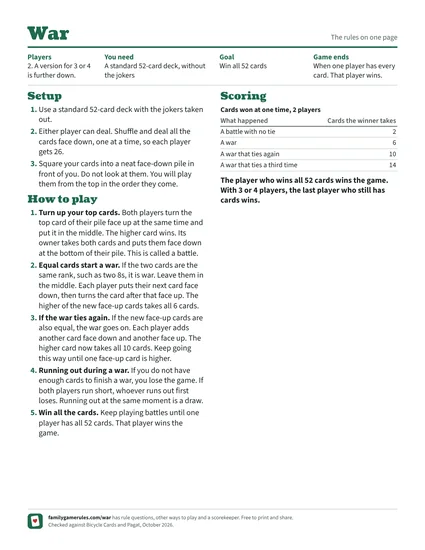
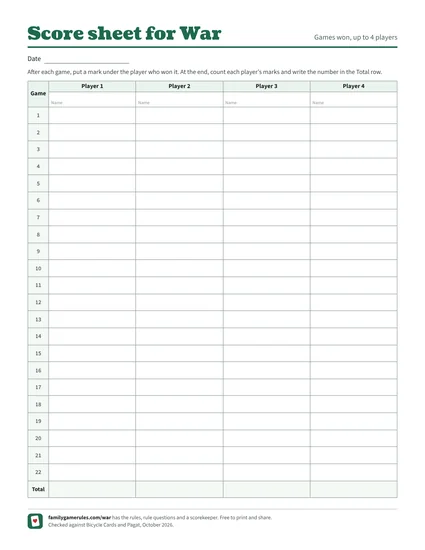
Print the whole game on one page, and a score sheet made for War. Both are free PDFs for Letter paper.
Setup
2 players. A version for 3 or 4 players is further down.
You need: A standard 52-card deck with the jokers taken out.
| In the set | Count |
|---|---|
| Number cards, 2 through 10 | 36 |
| Jacks | 4 |
| Queens | 4 |
| Kings | 4 |
| Aces | 4 |
| Total | 52 |
- Aces are high. The ace beats the king, and the 2 is the lowest card.
- Suits do not matter in War. Only the number or letter on a card counts.
- Use a standard 52-card deck with the jokers taken out.
- Either player can deal. Shuffle and deal all the cards face down, one at a time, so each player gets 26.
- Square your cards into a neat face-down pile in front of you. Do not look at them. You will play them from the top in the order they come.
| Players | Each player gets | Notes |
|---|---|---|
| 2 | 26 cards | The whole deck is dealt. |
| 3 | 17 cards | 1 card is left over. |
| 4 | 13 cards | The whole deck is dealt. |
Your pile
26 cards, face down
Other player’s pile
26 cards, face down
How to play
There are no turns. Both players play at the same time, over and over, until one of them has all the cards.
-
Turn up your top cards
Both players turn the top card of their pile face up at the same time and put it in the middle. The higher card wins. Its owner takes both cards and puts them face down at the bottom of their pile. This is called a battle.
- Cards rank from the ace down to the 2: ace, king, queen, jack, 10, 9, 8, 7, 6, 5, 4, 3, 2.
- Suits do not matter. The 8 of clubs and the 8 of hearts are equal.
- Take your card from the top of your pile without looking first. You never choose which card to play.
-
Equal cards start a war
If the two cards are the same rank, such as two 8s, it is war. Leave them in the middle. Each player puts their next card face down, then turns the card after that face up. The higher of the new face-up cards takes all 6 cards.
- The winner puts all the cards from the war face down at the bottom of their pile.
- Only the face-up cards are compared. The face-down cards are part of the prize.
-
If the war ties again
If the new face-up cards are also equal, the war goes on. Each player adds another card face down and another face up. The higher card now takes all 10 cards. Keep going this way until one face-up card is higher.
- Each extra round of the war adds 4 cards to the prize: 1 face down and 1 face up from each player.
-
Running out during a war
If you do not have enough cards to finish a war, you lose the game. If both players run short, whoever runs out first loses. Running out at the same moment is a draw.
- This also covers a tie on your very last card. With nothing left to put down, you cannot finish the war.
- Some groups play another way. If you run out, your last card is turned face up and counts for every round of that war. The game is a draw only if both players’ last cards are equal. Agree on the rule before you start.
-
Win all the cards
Keep playing battles until one player has all 52 cards. That player wins the game.
- A game of War can take a long time. The rules we checked set no time limit. If you need to stop early, agree on how to settle it before you begin. There is a rule question on this further down.
Example: a war, then a second war
Ana and Ben both turn up a 7, so it is war. Each puts 1 card face down and turns 1 face up. Ana shows the jack of spades and Ben shows the jack of diamonds. Those tie too, so the war goes on. Each adds 1 more card face down and 1 face up. Ana turns up the 4 of hearts and Ben turns up the king of clubs. The king is higher, so Ben takes all 10 cards and puts them face down under his pile.
Ana
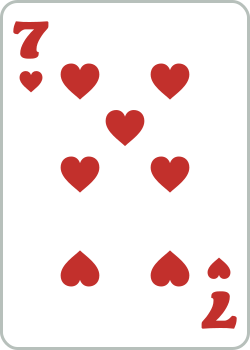
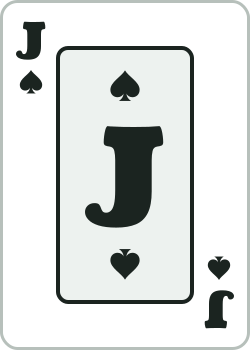
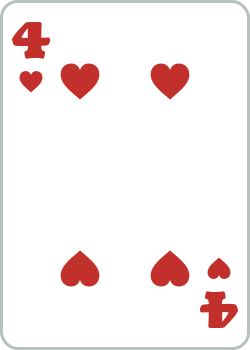
Two ties, then a 4
Ben
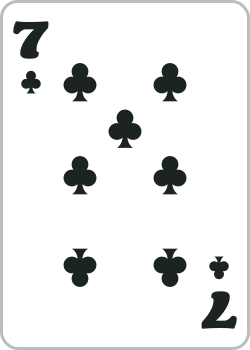
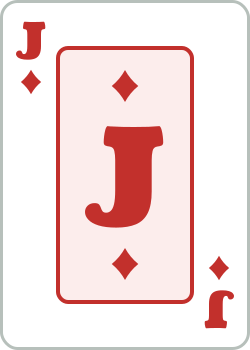
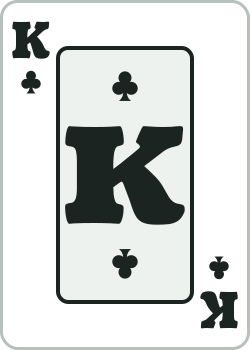
The king beats the 4. Ben wins all 10 cards.
Scoring
War has no points. You win by taking every card in the deck. The table shows how many cards change hands at once.
| What happened | Cards the winner takes |
|---|---|
| A battle with no tie | 2 |
| A war | 6 |
| A war that ties again | 10 |
| A war that ties a third time | 14 |
The player who wins all 52 cards wins the game. With 3 or 4 players, the last player who still has cards wins.
Nothing is written down during a game, because the cards keep the count. To play a match, mark the winner of each game on the score sheet and add up the games at the end.
A worked example: counting cards in Life and Death
Life and Death is a shorter version that ends with a count. It is under Variants below. Ana and Ben play through all 32 cards once. Then each counts the cards they won. Ana has 18 and Ben has 14, so Ana wins. The two counts add up to 32, which shows that no card was missed.
| What happened | Goes to | Points |
|---|---|---|
| Cards Ana won | Ana | 18 |
| Cards Ben won | Ben | 14 |
| Ana | 18 | |
| Ben | 14 |
Scorekeeper
War has no points. This counts the games each player wins, so you can play a match. It works in this browser, keeps the game if the page reloads, and needs no account.
Other ways to play
War for 3 or 4 players
Deal the cards so everyone has the same number: 17 each for 3 players or 13 each for 4. With 3 players, 1 card is left over and stays out of the game. Everyone turns up a card at the same time, and the highest card takes all of them. If two or more players tie for the highest card, there is a war, and every player joins it, even those whose cards were lower. Each player puts 1 card face down and 1 face up, and the highest face-up card takes everything in the middle. If the highest cards tie again, repeat. A player who runs out of cards drops out. The last player with cards wins.
House rules and other versions
- Three cards face down
- Many players put 3 cards face down in a war instead of 1, then turn 1 face up. Some say “W-A-R” as they lay the 3 cards down. If a player has too few cards, some groups let them play all they have, with the last one face up, and the other player puts down the same number.
- Last card face up
- A player who runs out of cards during a war does not lose at once. Their last card is turned face up and counts for every round of that war. The game is a draw only if both players’ last cards are equal.
- Jokers
- Add the 2 jokers as the highest cards, above the aces. To stop one player getting both, some groups take the jokers out before the deal and tuck one somewhere into each player’s pile.
- War by rank
- The tied cards set the size of the war. Each player puts down as many face-down cards as the number on the tied cards, such as 2 cards for a tie of 2s. A tie of jacks, queens or kings means 10 cards, and a tie of aces means 11. If someone has too few, everyone plays as many as the player with the fewest.
- Automatic War
- Turning up a 2 of any suit starts a war.
- Peace
- The opposite of War. The lower card wins each battle.
- Life and Death, a shorter game
- Use 32 cards: the ace down to the 7 in each suit. Deal 16 each. Cards you win go in a separate face-down pile and are not played again. On a tie, each player turns up their next card, with no face-down card. If the last cards tie, each player keeps their own. When every card is played, whoever won more cards wins.
Rule questions
How many cards does each player get in War?
26 cards each with 2 players. The whole 52-card deck is dealt out face down. With 3 players each gets 17 and 1 card is left over. With 4 players each gets 13.
Are aces high or low in War?
High. The ace beats every other card, and the 2 is the lowest. Suits make no difference, so two cards of the same rank always tie.
How many cards go face down in a war?
1 card from each player, then 1 face up, under the main rules. Many people play with 3 cards face down instead, and some say “W-A-R” as they lay them down. Agree on the number before you start.
What happens if the war cards tie again?
The war goes on. Each player adds 1 more card face down and 1 face up, and the higher face-up card takes everything in the middle. A war that ties once is worth 10 cards. It keeps going until one face-up card is higher.
What happens if you run out of cards during a war?
You lose the game. If both players run short, whoever runs out first loses, and running out at the same moment is a draw. Some groups play that your last card is turned face up and counts for the rest of that war instead. Agree on which rule you use before the game.
Can you look at your cards in War?
No. Your cards stay in a face-down pile, and you play them from the top in order. You never choose which card to play.
Do you shuffle the cards you win?
Not in the main rules we checked. Won cards go face down at the bottom of your pile, and you play on. Those rules do not say what order to put them in, and that order can change how the game turns out. Agree on it if it matters to your group.
What if the game takes too long?
The rules we checked set no time limit. The game ends only when one player has every card, and that can take a long time. If you have to stop, one fair way is to count the cards and give the game to the bigger pile, as the Life and Death version does. Agree on it before you start.
Who goes first in War?
Nobody. Both players turn up their cards at the same time, every time. Either player can deal.
Can 3 or 4 people play War?
Yes. Deal 17 cards each to 3 players, with 1 left over, or 13 each to 4. The highest card takes all the cards turned up. If the highest cards tie, every player joins the war. A player with no cards drops out, and the last player with cards wins.
Words used in War
- Battle
- One play in which each player turns up a card. The higher card takes them both.
- War
- What happens when the turned-up cards tie. Each player adds a card face down and a card face up, and the higher face-up card takes all of them.
- Pile
- Your face-down cards. You play from the top and put the cards you win at the bottom.
- Rank
- The number or letter on a card: ace, 2 through 10, jack, queen or king. War uses only the rank.
- Suit
- Hearts, diamonds, clubs or spades. Suits make no difference in War.
What you need
- A standard deck of playing cardsOne 52-card deck is enough for 2 to 4 players.Find it on Amazon (A standard deck of playing cards, opens in a new tab)
- Jumbo playing cardsOptional. Large cards are easier for small hands to turn over.Find it on Amazon (Jumbo playing cards, opens in a new tab)
As an Amazon Associate, we earn from qualifying purchases. How the site is paid for.
Checked against
These rules are written in our own words from Bicycle Cards and checked against Pagat. Sources last checked on October 12, 2026.
- First source: Bicycle Cards, War. The deal of 26 cards each, one at a time and face down, a battle, a war with 1 card down and 1 up, the 6 and 10 cards won, and the ending when one player has all the cards.
- Second source: Pagat, War. Aces high, suits ignored, not looking at the cards, running out during a war, the version for 3 or 4 players and most of the variants.
Other sources we used (1)
- Wikipedia, War (card game). The name Battle, Peace, Automatic War, the note that the order of won cards is not set, the playing time, and a third opinion on running out, three-card wars and the 3 or 4 player version.
Where the sources differ (9)
| Topic | Bicycle Cards | Pagat | This page |
|---|---|---|---|
| Card order and suits | Not stated. Only says that cards of the same rank make a war. | Aces high, down to the 2. Suits are ignored. | Follows Pagat. |
| Looking at your cards | Each player’s stack sits face down. It does not say whether players may look. | Players do not look at their cards. | Follows Pagat. |
| Running out of cards during a war | Not stated. | Gives two ways, with neither marked as the main one. Either a player who cannot finish the war loses, with a draw if both run out together, or the last card stays face up for the rest of the war. | The first of Pagat’s two ways is the main rule, since it is listed first. The other is a variant and is in the rule questions. Wikipedia says most descriptions are unclear on this point and gives both, and a third: start the game again. |
| Cards face down in a war | 1 face down, then 1 face up. | 1 face down, then 1 face up. Notes that many players put 3 face down. | 1 face down. The 3-card war is a variant and is in the rule questions. Wikipedia’s rules say 1, though its opening summary describes 3. |
| Number of players | 2 players. | 2 players, with a version for 3 or 4. | 2 players, with Pagat’s version for 3 or 4. Wikipedia gives the same version. |
| Dealing | Anyone may deal first. Cards are dealt one at a time, face down. | Deal out all the cards, 26 each. It does not say who deals or how. | Follows Bicycle. |
| A shorter game | None. The game ends only when one player has all the cards. | None for the main game, which it says can take a long time. Its Life and Death variation plays 32 cards once and is won by the player with more cards. | Life and Death is a variant and the scoring example. The rule question on long games suggests counting cards if you must stop, which is our suggestion. |
| Life and Death | Not covered. | Suits have no significance. A tie is settled by the next card, with nothing face down. | Follows Pagat. Wikipedia says one player takes the red suits and the other the black, which the page leaves out. |
| Order of won cards | Won cards go face down at the bottom of the stack. | Won cards go face down at the bottom of the packet. | The same, with Wikipedia’s point that the rules do not set the order of the won cards. |
What on this page is our own
- The playing time is an estimate. The 10 to 40 minutes comes from Wikipedia’s summary box, and “sometimes much longer” follows Pagat’s remark that the game can take a long time.
- The war example and the Life and Death card count are our own.
- The 14 cards for a war that ties a third time, and the 4 cards each extra round adds, are our arithmetic from Bicycle’s 6 and 10. So are the counts in the Life and Death example adding up to 32.
- Leaving the 1 spare card out of a 3-player game is our reading of Pagat’s rule to deal as many cards as can be shared equally.
- Stopping a long game early and giving it to the bigger pile is our suggestion, modeled on how Life and Death is decided. No source gives it for the regular game.
- The line that War takes no skill and suits young children follows Pagat’s description of it as a children’s game with no strategy.
- That nobody goes first, and that a tie on your last card counts as a war you cannot finish, are our readings of the rules.
- We call each player’s cards a pile. Bicycle says stack and Pagat says packet.
- The notes under What you need describe products and are not rules.
- The pieces pictured at the top of the page are our own example.
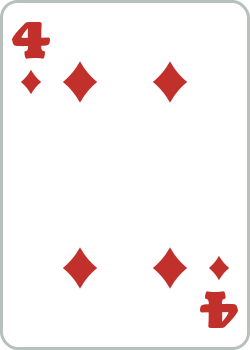
Spotted a mistake? Email [email protected] and we'll check it against the sources.