Rummoli rules
Rummoli is a Canadian card game for 2 to 8 players, played with chips on a board of 9 spaces. Each hand starts with a round of poker. Then everyone plays their cards out in order, one suit at a time, taking chips for the pay cards. The first player out of cards wins the Rummoli pot.
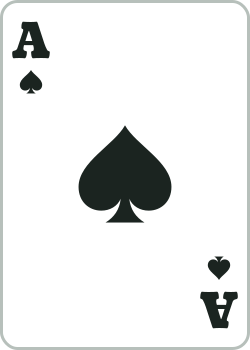
- Players
- 2 to 8, each playing for themselves
- You need
- A Rummoli board, a standard 52-card deck with no jokers, and chips or coins
- Deal
- All the cards, one at a time, to each player and one extra hand called the widow
- Goal
- Win chips: the poker pot, the pay-card spaces, and the Rummoli pot for going out first
- Game ends
- When the players agree to stop. The player with the most chips wins
- Playing time
- About 10 to 15 minutes a hand. A game lasts as long as you like
Quick start
- Divide the chips evenly. Before every deal, each player puts 1 chip on each of the 9 spaces of the board.
- Deal all the cards one at a time to each player and to one extra hand, the widow. The dealer may swap hands with the widow or auction it to the others.
- Poker: everyone picks their best 5 cards. The best poker hand wins the chips in the poker space.
- The poker winner then plays the lowest card in their hand. Whoever holds the next card of that suit plays it, and so on up the suit.
- A suit stops at its ace or at a card nobody holds. The last player to play leads their lowest card of the other colour. Lay down a pay card to take its chips.
- The first player out of cards takes the Rummoli pot and 1 chip from every player for each card they still hold. Chips nobody won stay on the board for the next hand.
Setup
2 to 8 players, each playing for themselves. Pagat, writing about the whole family of games Rummoli belongs to, says 4 to 7 is best.
You need: A standard 52-card deck with the jokers taken out, a Rummoli board and chips.
| In the set | Count | Worth when scoring |
|---|---|---|
| Aces | 4 | High. An ace ends its suit in the play |
| Kings, queens and jacks | 12 | |
| Number cards, 2 through 10 | 36 | |
| Total | 52 |
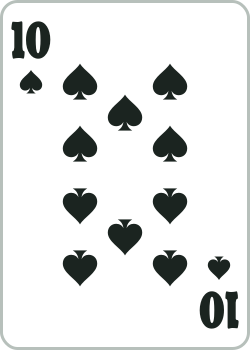
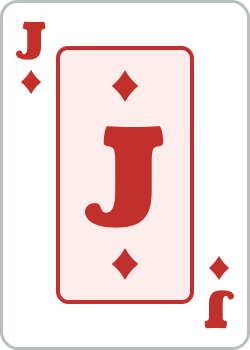
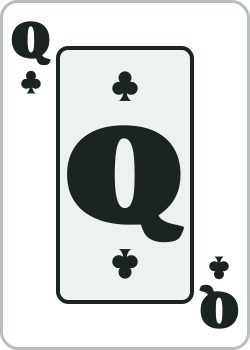
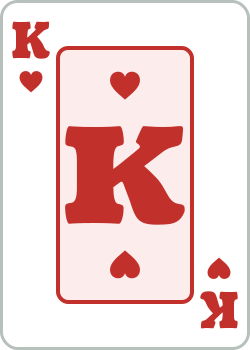
- The board has 9 spaces for chips. A common layout is the Rummoli pot in the middle and, around it, the poker pot and 7 pay spaces: the 10 of spades, the jack of diamonds, the queen of clubs, the king of hearts, the ace of spades, the ace and king of diamonds, and a 7, 8 and 9 in the same suit.
- Boards are not all the same. If yours shows different pay cards, play the cards printed on your board. A board drawn on a sheet of paper works fine.
- Divide the chips evenly before the first deal. Coins work as chips, and many families play for pennies or nothing at all.
- Put the board in the middle and divide the chips evenly. Cut for the first dealer: high card deals, aces high.
- Before every deal, each player puts 1 chip on each of the 9 spaces. Chips left from earlier hands stay put.
- Deal the whole deck one card at a time to each player and to one extra hand, the widow. Uneven hands are fine.
- The dealer may swap their hand for the widow without looking at it first. The hand given up is dead and is not played.
- Or the dealer may auction the widow. The highest bidder pays the dealer and swaps hands. Whoever takes the widow must keep it.
Your hand
13 cards
Each other hand
13 cards each
The widow
An extra hand, dealt face down
- If nobody swaps, the widow stays out of play. Some players get one more card than others, and that does not matter.
- The widow does not take part in the play. Its cards, and the cards in a dead hand, are what make a suit stop part way up.
- The first rule sheet we checked says nothing against swapping a hand that holds pay cards. Wikipedia says the dealer, or a bidder, may not take the widow if their hand holds a pay card. Many groups play that way too.
How to play
Every hand has two parts with the same cards: a hand of poker, and then the play, where all the cards go out in order. Payments for pay cards happen during the play.
-
Agree how the poker part works
Agree on one of two ways to play the poker part. In the simple way, everyone shows their best 5 cards and the best hand takes the poker pot. In the betting way, players bet as in ordinary poker, and bets go into the poker pot.
- In the betting way, the pot goes to the last player left in, or to the best hand when the betting ends and the hands are shown. A player who dropped out cannot claim the pot, even with a better hand.
- Poker hands rank in the usual order. See our <a href=”/poker-hand-rankings/”>poker hand rankings</a> chart if anyone needs a reminder.
-
Play your best 5 cards
Each player picks 5 cards for poker and sets the rest aside. After the poker part, take all your cards back up for the play.
- The best poker hand takes the chips in the poker space. That player also starts the play.
-
Lead your lowest card
The poker winner lays down the lowest card in their hand, face up in front of them, and says it out loud.
- Each player keeps the cards they lay down in their own face-up pile. Nobody looks back through the piles.
-
Play up the suit
Whoever holds the next card of that suit lays it down and says it. If they hold the card after that too, they keep going.
- Suits do not wrap around. A suit always ends with its ace.
- If a player forgets to play a card they hold, the others can remind them. The rules do not allow passing on purpose.
-
A stop, and the next lead
A suit stops at its ace, or when the next card is in the widow or a dead hand. The last player to play leads their lowest card in a suit of the other colour.
- Red follows black and black follows red.
- Example: the run of spades stops at the 9 because the 10 of spades is in the widow. Whoever played the 9 now leads their lowest heart or diamond.
- Some boards and families allow any suit for the next lead. Agree before you start.
-
Take the chips for a pay card
Lay down a pay card to take the chips on its space. Win the ace and king of diamonds, or a 7, 8 and 9 of one suit, by laying down all of those cards yourself, one after another.
- Say the card out loud as you play it and claim the chips. If you lay down a pay card without claiming it, the chips stay on the space for a later hand.
- The ace and king of diamonds and the 7, 8 and 9 spaces are hard to win, so their chips often build up over several hands.
-
When nobody can lead
If nobody can lead a card of the other colour, the hand stops. Each player puts 1 chip into the Rummoli pot for each card in their hand.
- The pot stays on the board. The next player to go out wins it, with the chips added to it that hand.
-
Go out to win the Rummoli pot
The first player to lay down their last card ends the hand and takes the Rummoli pot. Every other player pays them 1 chip for each card still in hand.
- Then the deal passes to the left, everyone antes 1 chip on each space again, and the next hand begins.
| Space | Who takes the chips |
|---|---|
| Poker pot | The best poker hand in the first part of the hand |
| 10 of spades | The player who lays down the 10 of spades in the play |
| Jack of diamonds | The player who lays down the jack of diamonds |
| Queen of clubs | The player who lays down the queen of clubs |
| King of hearts | The player who lays down the king of hearts |
| Ace of spades | The player who lays down the ace of spades |
| Ace and king of diamonds | A player who lays down the king and then the ace of diamonds |
| 7, 8 and 9 of one suit | A player who lays down a 7, 8 and 9 of the same suit in a row |
| Rummoli pot (the middle) | The first player to run out of cards |
Example: one run of play
You, Ben, Cara and Dev are playing, and you won the poker part, so you lead. Your lowest card is the 3 of clubs. Ben holds the 4 and 5 of clubs and lays both down. Nobody has the 6 of clubs, because it is in the widow, so the clubs stop. Ben played last, so he leads the lowest red card he holds, the 9 of diamonds. Cara plays the 10. Dev plays the jack of diamonds, a pay card, and takes the chips on that space. He also holds the queen and lays it down. You hold the king and ace of diamonds, so you play them one after the other and take the chips on the ace and king of diamonds space. The ace ends the suit, and you lead your lowest black card.
Clubs
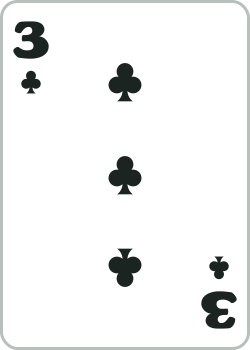
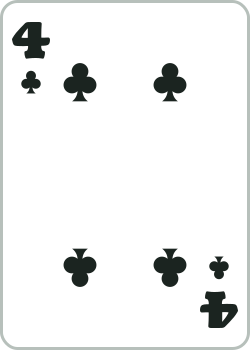
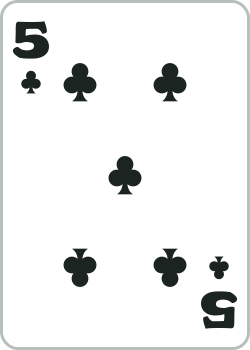
You, then Ben twice. The 6 is in the widow
Diamonds
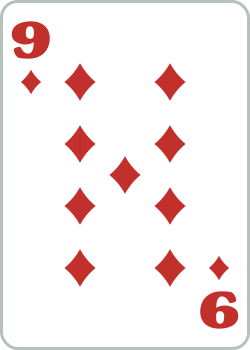
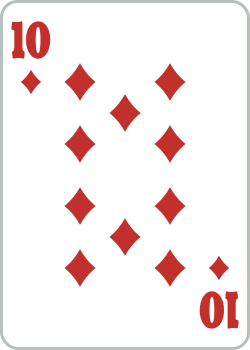
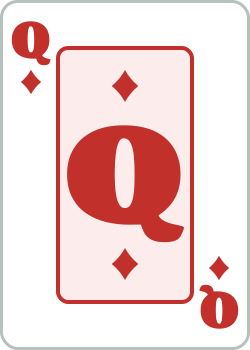
Ben, Cara, then Dev twice. Dev takes the jack of diamonds space
Your two
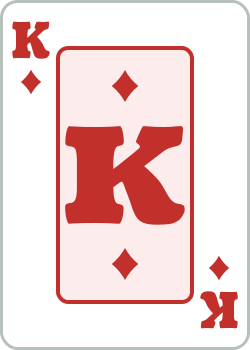
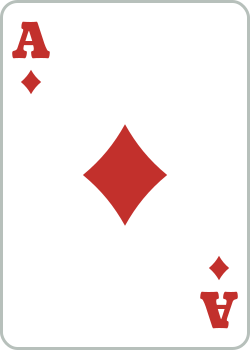
One after the other, so you take the ace and king space
Scoring
Rummoli has no points. Chips change hands during every hand, and the player with the most chips when you stop is the winner.
| When | Who pays | Who collects |
|---|---|---|
| Before the deal | Every player, 1 chip on each of the 9 spaces | Nobody yet |
| The widow is auctioned | The highest bidder | The dealer |
| The poker part ends | Bets, in the betting way | The best poker hand takes the poker space |
| A pay card or pay sequence is laid down | Nobody pays | That player takes the chips on its space |
| A player goes out | Each other player, 1 chip for each card in hand | The player who went out, who also takes the Rummoli pot |
| Nobody can lead, so the hand stops | Each player, 1 chip into the Rummoli pot for each card in hand | Nobody. The pot waits for the next player to go out |
- Chips on a space nobody won stay there. New antes are added on top, so some spaces grow large over several hands.
- A player who runs out of chips can no longer ante. Most families let that player drop out, and the game can go on until only one player has chips left.
Agree when to stop, such as at a set time. The player with the most chips wins.
The chips keep the score, so there is nothing to write down during a hand. At the end, any chips still on the board are won in one last hand: deal 5 cards to each player, with no ante, and the best poker hand takes them all. Some families cut the cards instead, and the high card takes everything.
A worked example: going out
You lay down your last card. Ben still holds 3 cards, Cara holds 1 and Dev holds 5. Each pays you 1 chip for every card in hand, and you also take the 12 chips in the Rummoli pot.
Ben
Pays you 3 chips
Cara
Pays you 1 chip
Dev
Pays you 5 chips
| What happened | Points |
|---|---|
| From Ben, 3 cards | 3 |
| From Cara, 1 card | 1 |
| From Dev, 5 cards | 5 |
| The Rummoli pot | 12 |
| Chips you collect | 21 |
Scorekeeper
Chips keep the score during the game. Use this to keep a running total over a long night: after each hand, enter each player’s chips won or lost in that hand, with a minus for a loss. The highest total wins. It works in this browser, keeps the game if the page reloads, and needs no account.
Other ways to play
Rummoli for 2 players
The rules do not change. With 2 players and the widow, each hand gets 17 or 18 cards. A third of the deck sits in the widow, so suits stop often and the lead changes hands a lot.
House rules and other versions
- No widow swap with a pay card
- The dealer may not swap hands with the widow, and a player may not buy it, if their own hand holds a pay card.
- A final hand for each space
- At the end of the game, instead of one last poker hand for everything left on the board, play a separate hand for each space that still has chips, starting with the smallest.
- Any suit on the next lead
- After a stop, the next lead may be in any suit except the one just played, not only the other colour. This leaves more choice to the player who leads.
- Pay cards before the poker
- In the older game Tripoley, players show their pay cards and collect for them right after the deal, before the poker part, instead of during the play. Its board pays for the hearts.
Rule questions
How many cards do you deal in Rummoli?
All 52, one at a time, to each player and to one extra hand called the widow. Some hands may have one card more than others, which does not matter. With 4 players and the widow, hands get 10 or 11 cards.
What is the widow in Rummoli?
An extra hand dealt as if to another player. The dealer may swap their hand for it without looking, or auction it to the other players. Whoever takes it must keep it. The widow’s cards are never played, so they make suits stop part way.
What are the pay cards in Rummoli?
On a common board: the 10 of spades, the jack of diamonds, the queen of clubs, the king of hearts, the ace of spades, the ace and king of diamonds together, and a 7, 8 and 9 in one suit. Boards vary, so play the cards printed on yours.
Who starts the play in Rummoli?
The player who won the poker part. They lead the lowest card in their hand.
What happens when a suit stops?
The player who laid down the last card leads again with the lowest card they hold in a suit of the other colour. If nobody can lead, the hand ends and everyone pays 1 chip into the Rummoli pot for each card they hold.
What happens to chips nobody wins?
They stay on their space. Everyone adds 1 more chip to every space before the next deal, so unclaimed spaces keep growing.
Do you have to bet in the poker part?
No. Agree before you start. In the simple way, everyone just shows their best 5 cards and the best hand wins. In the betting way, players bet and raise as in ordinary poker.
Is Rummoli the same as Michigan Rummy and Tripoley?
They are close relatives, all modern forms of an old European game called Poch. The boards differ, and Tripoley pays for its pay cards before the poker part instead of during the play.
How does a game of Rummoli end?
When the players agree, such as at a set time or when all but one player is out of chips. Leftover chips on the board are won in one last poker hand, and the player with the most chips wins.
Words used in Rummoli
- Widow
- The extra hand dealt as if to another player. Its cards are never played.
- Dead hand
- A hand given up when someone swaps for the widow. It is set aside face down and not played.
- Pay card
- A card shown on the board, such as the jack of diamonds. Lay it down in the play to take the chips on its space.
- Stop
- The point where a suit can go no higher, because the next card is in the widow or a dead hand, or because the ace was played.
- Rummoli pot
- The space in the middle of the board. The first player out of cards wins it.
- Ante
- The 1 chip each player puts on every space before a deal.
What you need
- A Rummoli boardBoards come in cloth, card or wood. Any 9-space layout works, even one drawn on paper.Find it on Amazon (A Rummoli board, opens in a new tab)
- A standard deck of playing cardsOne 52-card deck. Take the jokers out.Find it on Amazon (A standard deck of playing cards, opens in a new tab)
- Poker chips or countersAbout 20 to 30 for each player to start. Coins work too.Find it on Amazon (Poker chips or counters, opens in a new tab)
As an Amazon Associate, we earn from qualifying purchases. How the site is paid for.
Checked against
These rules are written in our own words from F.G. Bradley’s and checked against Wikipedia. Sources last checked on November 24, 2026.
- First source: F.G. Bradley’s, “Rummoli” Rules, the game’s rule sheet as hosted by the store. The main rules: 2 to 8 players, the board of 9 spaces, cutting for the first dealer with aces high, dividing the chips evenly, 1 chip on each space before every deal, dealing one at a time with the widow, uneven hands, the dealer’s blind swap and the auction, the dead hand, keeping a widow that turns out worse, the two ways to play the poker part, leading the lowest card, playing up the suit, a suit ending at its ace or a dead card, the next lead in the other colour, the hand ending when nobody can change colour with 1 chip a card into the Rummoli space, pay cards and pay sequences, going out and the 1 chip a card payment, unclaimed chips carrying over, and the two ways to settle the board at the end.
- Second source: Wikipedia, Rummoli. A check of the main rules, and the names of the 9 spaces on a common board. Also: Canadian, first sold in 1940 by Copp Clark of Toronto, a family game for small stakes, the rule against taking the widow with a pay card, unclaimed pay cards staying on their space, passing when you cannot play, the 7-8-9 and ace-king spaces building up, the end of the game by agreement or when all but one player is out, the final poker hand and the per-space final hands, and the link to Poch.
Other sources we used (1)
- Pagat, Tripoli (Three in One). The family of games: Tripoley, Rummoli, Michigan Rummy and Royal Rummy as forms of Poch, 4 to 7 as the best number of players, Rummoli as the form that pays for the pay cards during the play, Tripoley’s hearts board and its payments before the poker, any suit except the last one for the next lead, and the final poker hand for leftover chips.
Where the sources differ (6)
| Topic | F.G. Bradley’s | Wikipedia | This page |
|---|---|---|---|
| Taking the widow while holding a pay card | No restriction is given. The dealer may swap blind, or auction the widow. | The dealer may not swap, and a bidder may not buy the widow, if their hand holds a pay card. | Follows the rule sheet, and gives Wikipedia’s rule as a variant that many groups play. |
| The next lead after a stop | The lowest card of a suit of the opposite colour to the suit just played. | The same: the lowest card of the opposite colour. | Follows both. Pagat’s general rules allow any suit except the one just played, given here as a variant. |
| Who plays the next card of a suit | Play passes to the left, and the next player plays the next card or cards of the suit. | Whoever holds the next card of the suit must play it. | Whoever holds the next card plays it, and keeps going while they hold the cards that follow. The card can only be in one hand, so both wordings come to the same play. |
| The ace and king of diamonds and the 7, 8 and 9 | A player who lays down a pay card or pay sequence takes the chips on its space. | Lists the spaces but does not say how a two-card or three-card space is won. | Won by a player who lays down all of its cards, one after another. That is our reading of the rule sheet’s “sequence”, and it matches how Pagat describes the same spaces in its Rummoli note. |
| When nobody can lead | Each player puts 1 chip into the Rummoli space for each card left in hand. | Each player puts 1 chip into the centre pot for each card, and the winner of the next hand collects both pots. | 1 chip a card into the Rummoli pot, which stays on the board for the next player to go out. Both sources come to the same thing. |
| Settling the board at the end | Either cut the cards, high card takes all, or deal a 5-card poker hand to each player and the best hand takes all. | One final poker round for everything, or a round for each space that still has chips. | One last poker hand, with cutting for high card as another way. The per-space rounds are a variant. |
What on this page is our own
- The playing time of about 10 to 15 minutes a hand is our estimate.
- The play example, the going-out example and the pieces pictured at the top of the page are our own, and so is their arithmetic.
- The hand sizes for 2, 3, 4 and 5 players come from dividing 52 cards among the players and the widow.
- That a forgotten card may not be held back on purpose follows from both sources saying the holder of the next card plays it.
- That a player who runs out of chips usually drops out is our reading of Wikipedia’s ending, when all but one player is out of chips.
- The suggestion of 20 to 30 chips each to start is ours. Neither rule source sets a number.
- The tips for playing well are our own advice, not part of the rules.
Spotted a mistake? Email contact@familygamerules.com and we'll check it against the sources.
More games like Rummoli
View all card games-
 312 to 9 playersA quick draw-and-discard card game for 2 or more players.See the rules
-
 Crazy Eights2 to 8 playersA card game for 2 to 8 players with a standard deck.See the rules
-
 Rummy2 to 6 playersA draw-and-discard card game for 2 to 6 players.See the rules
-
 Hearts3 to 10 playersA trick-taking card game where points are bad.See the rules